O dióxido de vanádio (VO₂) emergiu como um dos materiais termocrômicos mais promissores para tecnologias de eficiência energética de próxima geração. Quando projetado em nanoescala, o VO₂ revela propriedades extraordinárias que os materiais em escala macroscópica simplesmente não conseguem igualar. Este guia examina três aspectos críticos da nano-estrutura do VO₂.Materiais VO₂—fase puraVO2 monoclíniconanopartículas,VO2 dopado com tungstênio nanopartículas, eNanofios de VO2—fornecendo aos pesquisadores e engenheiros informações práticas para a seleção de materiais e o desenvolvimento de aplicações.
---
Entendendo os fundamentos: por que o Nano-VO₂ é importante
A aproximadamente 68 °C, o VO₂ em sua forma maciça sofre uma transição metal-isolante (TMI) reversível de primeira ordem, acompanhada por mudanças drásticas em suas propriedades ópticas e elétricas. Essa transição de fase, impulsionada pelo mecanismo de Mott-Hubbard, transforma o VO₂ de um semicondutor monoclínico para um estado metálico rutilo. No entanto, o VO₂ em sua forma maciça apresenta altas temperaturas de transição, baixa transmitância na região do visível e eficiência limitada na modulação solar.
A nanoestruturação supera essas limitações por meio de três mecanismos principais: efeitos de confinamento quântico que alteram a absorção óptica, aumento da relação área superficial/volume que aprimora a cinética de reação e flexibilidade na incorporação de dopantes que permite a engenharia precisa da transição de fase. Essas vantagens tornam o nano-VO₂ indispensável para janelas inteligentes, sensores térmicos, sistemas de armazenamento de energia e dispositivos de computação neuromórfica.
---
Nanopartículas de VO₂: Blocos de construção versáteis
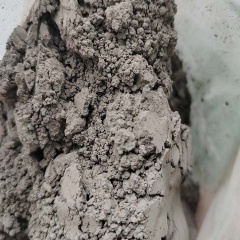
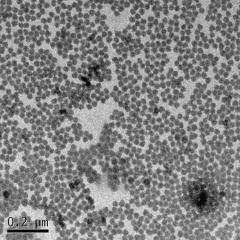
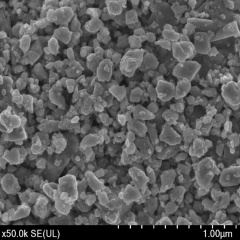
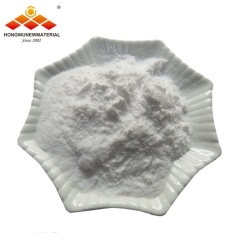
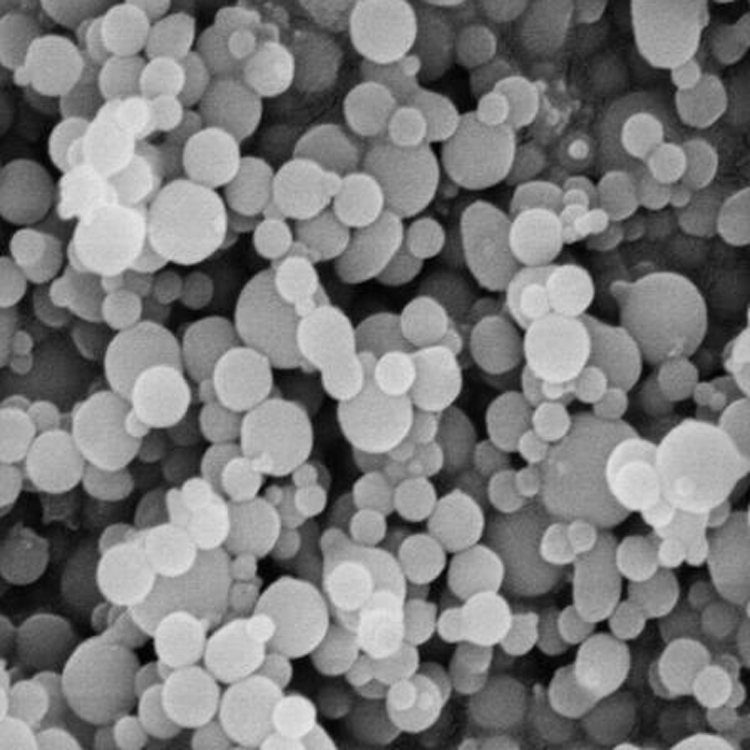
As nanopartículas de VO₂ (tipicamente de 100 a 200 nm) representam a forma mais acessível comercialmente de dióxido de vanádio nanoestruturado. Sua morfologia quase esférica permite a dispersão homogênea em matrizes poliméricas, tintas e revestimentos.
Principais parâmetros de desempenho:
- Temperatura de transição de fase:67°C ± 3°C
A principal limitação das nanopartículas de VO₂ não dopadas reside na sua elevada temperatura de transição, o que restringe a sua utilização prática em aplicações à temperatura ambiente, como o envidraçamento arquitetônico.
---
Nano VO₂ dopado com W: Engenharia da transição de fase
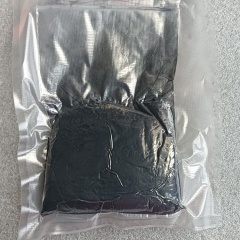
A dopagem com tungstênio representa a estratégia mais eficaz para reduzir a temperatura de transição de fase do VO₂ para operação em temperatura ambiente. Cada porcentagem atômica de tungstênio incorporada normalmente reduz a temperatura de transição em aproximadamente 20–26 °C, permitindo uma calibração precisa para aplicações específicas.
Considerações críticas sobre doping:
Teor de tungstênio (em %)
|
Temperatura de transição (°C)
|
Aplicação principal
|
| 0% |
67°C ± 3°C
|
Sensores de alta temperatura
|
| 1% |
45°C ± 3°C
|
Interruptores térmicos industriais
|
| 1,5% |
33°C ± 3°C
|
Vidros inteligentes automotivos
|
| 2% |
22°C ± 3°C
|
Janelas energeticamente eficientes para edifícios
|
O nano-VO₂ dopado com W mantém a transição estrutural monoclínica-rutilo, introduzindo estados eletrônicos localizados que facilitam a nucleação de portadores em energias térmicas mais baixas. No entanto, o excesso de tungstênio (>3 at%) degrada a eficiência de modulação solar e reduz a cristalinidade, estabelecendo um limite máximo prático de dopagem para a maioria das aplicações ópticas.
Para aplicações em janelas inteligentes, nanopartículas de VO₂ dopadas com tungstênio, incorporadas em camadas intermediárias de tereftalato de polietileno (PET) ou polivinil butiral (PVB), demonstram modulação solar superior a 15%, mantendo a transmitância visível acima de 45% — atendendo aos limites de desempenho para integração em edifícios comerciais.
---
Nanofios de VO₂: Arquiteturas Funcionais Unidimensionais
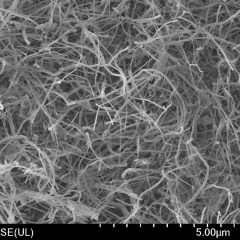
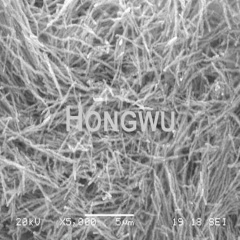
Os nanofios de VO₂ exibem propriedades anisotrópicas únicas, decorrentes de suas altas proporções de aspecto (comprimento: 10 µm; diâmetro: 100 nm). Essas estruturas unidimensionais demonstram comutação óptica dependente da orientação, transporte eletrônico aprimorado ao longo do eixo do fio e flexibilidade mecânica superior em comparação com suas contrapartes particuladas.
Características distintivas:
- Transição de fase anisotrópica: Os nanofios frequentemente exibem regiões de transição alargadas devido a fases metaestáveis estabilizadas na superfície.
- Efeitos de campo local aprimorados: Diâmetros subcomprimento de onda permitem interações plasmônicas na fase metálica.
- Integração direta de dispositivos: Nanofios individuais servem como elementos ativos em transistores de efeito de campo, memristores e sensores de nanofio único.
Pesquisas recentes publicadas na revista Advanced Functional Materials (2025) demonstraram que conjuntos de nanofios de VO₂ cultivados em substratos flexíveis atingem taxas de comutação de resistência reversíveis superiores a 10⁴, posicionando-os como candidatos promissores para aplicações de memória não volátil e sinapses artificiais em arquiteturas de computação neuromórfica.
---
Guia de Seleção Comparativa
Propriedade
|
monoclínicoVO2
|
VO2 dopado com W
|
Nanofios
|
Temperatura de transição
|
68°C
|
Ajustável (10–50°C)
|
50–65°C (dependendo do tamanho)
|
Modulação solar
|
Moderado
|
Alto
|
Variável (anisotrópica)
|
Dispersibilidade
|
Excelente
|
Excelente
|
Desafiante
|
Escalabilidade
|
Alto
|
Moderado
|
Moderado
|
Melhor aplicativo
|
Revestimentos,Compósitos
|
Janelas inteligentes
|
Sensores,Eeletrônica
|
Nível de custo
|
$ |
$$ |
$$$ |
---
Perguntas frequentes
P: O nano-VO₂ dopado com W pode atingir a comutação à temperatura ambiente sem sacrificar o desempenho óptico?
A: Com uma dopagem de tungstênio de 2,0 at%, as temperaturas de transição se aproximam de 20 °C com modulação solar aceitável (ΔTsol 12–14%). No entanto, a transmitância visível diminui, o que torna necessários revestimentos antirreflexo ou distribuições de partículas otimizadas para aplicações comerciais em janelas.
P: Os nanofios de VO₂ estão disponíveis comercialmente?
A: Atualmente, os nanofios de VO₂ permanecem principalmente um material de pesquisa fornecido por fornecedores especializados em nanomateriais em quantidades de gramas. A produção em escala industrial continua limitada pela capacidade de crescimento e pelos custos do substrato.
---
O panorama do nano-VO₂ está evoluindo rapidamente.Para organizações que avaliam a adoção de nano-VO₂, as nanopartículas dopadas com tungstênio oferecem o caminho comercial mais imediato para vidros energeticamente eficientes, enquanto os nanofios apresentam oportunidades de alto valor na eletrônica de próxima geração. Compreender as vantagens e limitações distintas de cada morfologia permite uma seleção de materiais informada, alinhada com requisitos de desempenho específicos e restrições de fabricação.


 português
 English
 français
 Deutsch
 русский
 italiano
 español
 日本語
日本語 한국의
한국의 Türkçe





 8620-87226359,8620-87748917

